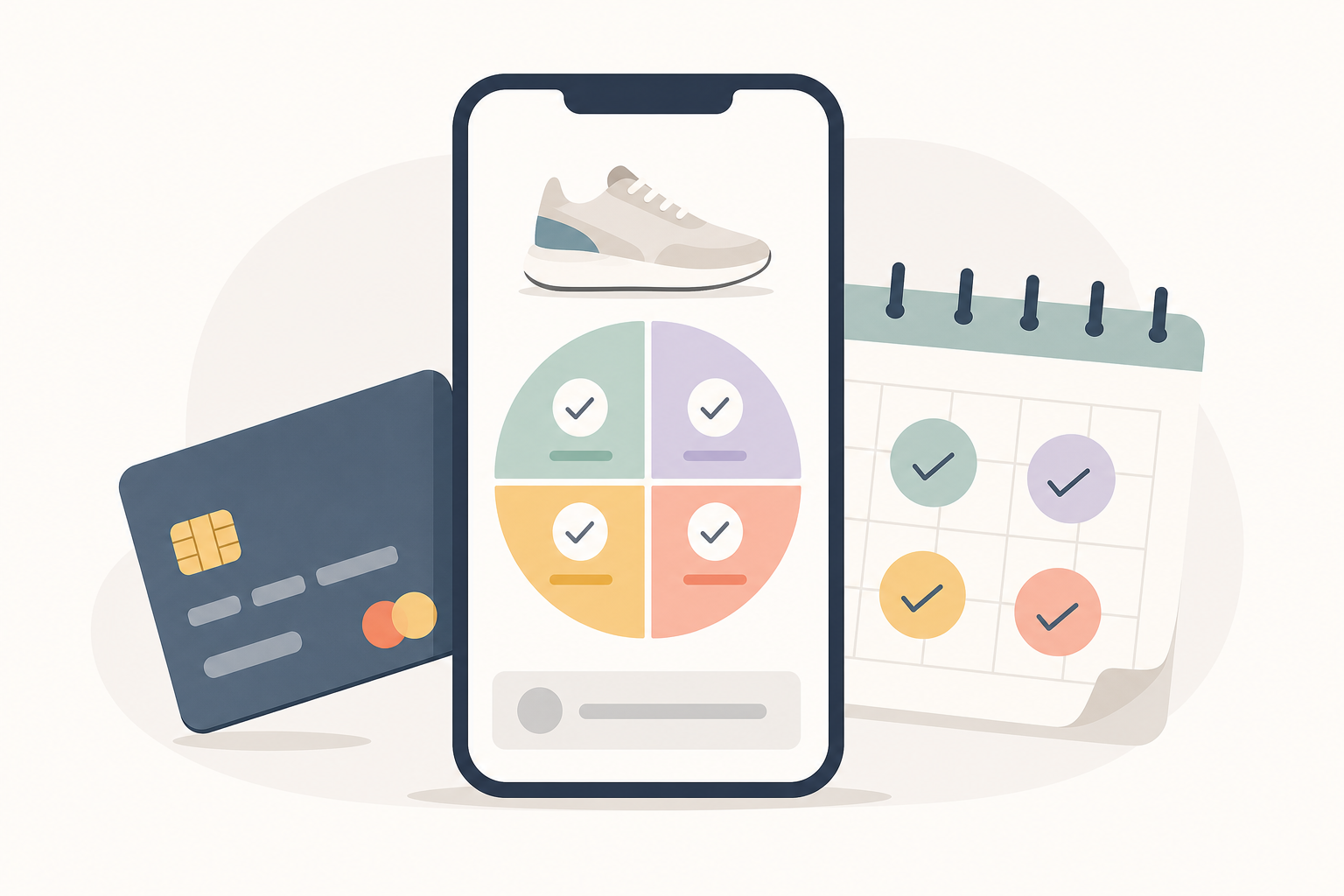
Disclaimer: This article is provided for informational purposes only and is not intended as financial advice. Individual circumstances vary. Consumers should consider their own financial situation and consult a qualified professional regarding their specific needs.
If you've ever used buy now pay later and held your breath a little wondering what the next payment would do to your account, you're not alone. The basics are simple, but there are a few things about how the schedule works, what fees may show up, and how it all affects your credit that are good to know ahead of time.
TLDR:
- Most pay-in-four plans split purchases into 4 payments over 6 weeks, and terms vary by provider. Four does not charge interest, but platform charges for automatic payments and late fees may still apply.
- Credit reporting and score effects vary by provider and product; Affirm, for example, reports to Experian and TransUnion, and unpaid balances sent to collections may still affect your credit
- LendingTree's 2026 BNPL Report found 47% of BNPL users reported paying late in the past year.
- Four offers pay-in-four with no credit check when signing up and no SSN required. Fees are disclosed before you confirm, and platform charges and late fees may apply.
What Is Buy Now Pay Later?
Buy now pay later is a short-term installment arrangement that often lets you split a purchase into smaller payments spread over a few weeks or months, instead of paying the full amount upfront. With many providers, you get the item right away, and the payments follow on a schedule set at checkout.
With most pay-in-four BNPL plans, you pay the first installment at checkout, then make three more payments, typically every two weeks, until the balance is settled. Many providers offer a quick application, and some do not require a credit card. Four buy now pay later is one option built around this model.
That growth may reflect how some younger shoppers, who often prefer debit over revolving credit, want predictable payment schedules they can track.
How Buy Now Pay Later Payments Work at Checkout
The process is often quick. When you reach checkout at a participating store, you select BNPL as your payment method instead of a credit or debit card. With many providers, you get a quick decision. Not all applicants are approved. Results may vary.
Here's what happens next:
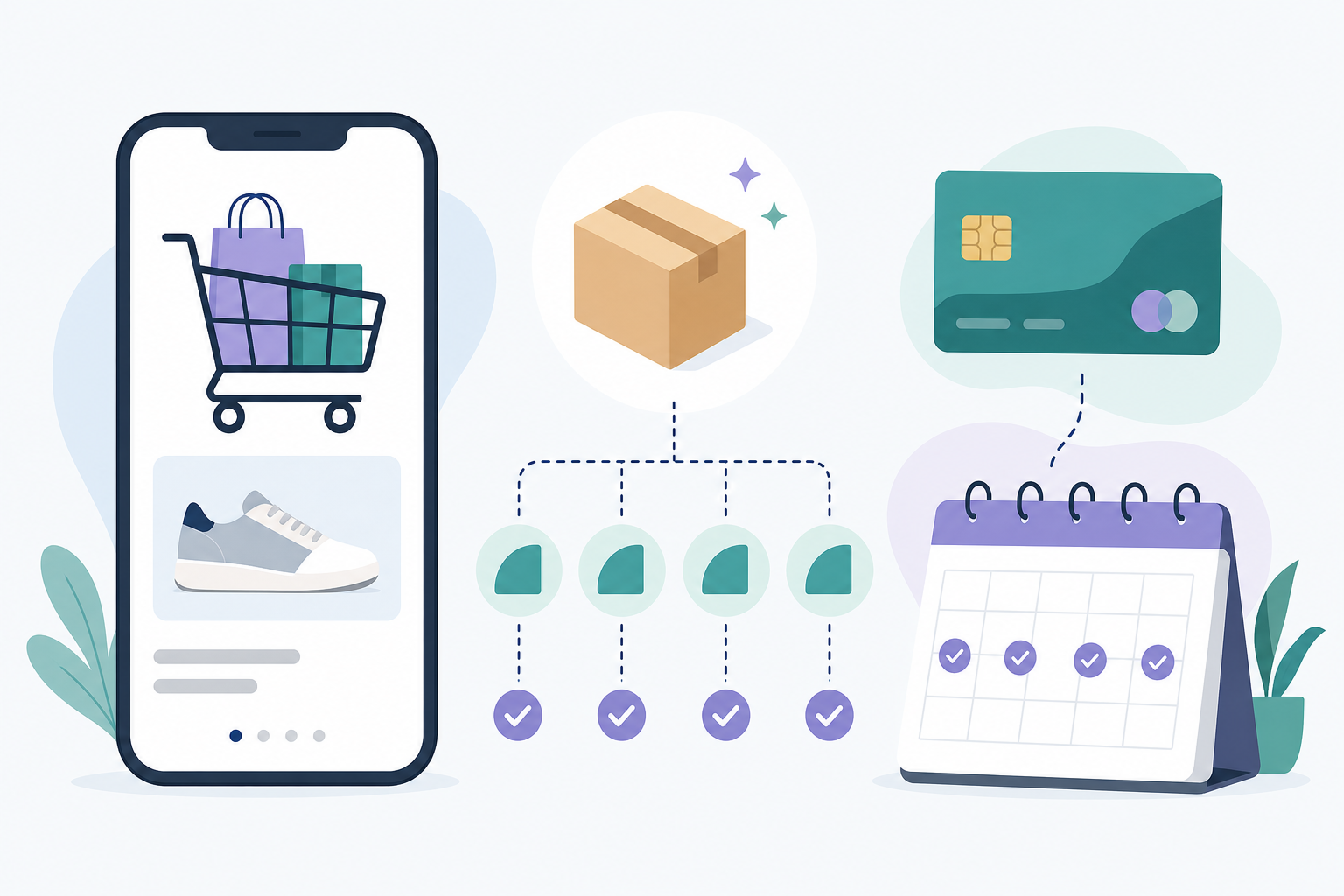
- With most pay-in-four plans, you pay the first installment right at checkout, typically about 25 percent of the total purchase price
- With many retailers, the item ships right away, though shipping times vary by retailer
- With most pay-in-four plans, the remaining three payments are scheduled automatically, typically two weeks apart
- Most BNPL providers pull each payment from your linked debit card, bank account, or mobile wallet on the scheduled date
With many providers, the schedule is set from the start, and some send a reminder before each payment is due.
Common BNPL Repayment Structures
Two structures are common in the BNPL space, and they often work differently.
This comparison reflects most standard pay-in-four BNPL plans. Terms vary by provider - check each company's terms before committing.
Structure | Timeline | Interest | Typical use |
|---|---|---|---|
Pay-in-four | Most plans, typically six weeks | Terms vary by provider; some charge no interest, while fees and other charges may apply. | Everyday purchases |
Monthly installments | Typically 3 to 36 months | APR may apply | Large purchases like furniture or electronics |
On most standard pay-in-four plans, customers complete four payments in about six weeks. Four does not charge interest, but platform charges for automatic payments and late fees may still apply.
Longer-term monthly plans often work more like personal loans, spreading a bigger purchase over months or years, and they often carry an APR that may add meaningfully to your total cost. It is worth reading the terms for any BNPL provider closely before choosing a longer plan.
Does Buy Now Pay Later Charge Interest?
Four does not charge interest on its pay-in-four plans, but platform charges for automatic payments and late fees may still apply. Many longer-term monthly plans are different, often carrying an APR that may add up over time the way a personal loan would.
That said, "no interest" does not mean "no fees." With many BNPL providers, three cost categories are worth knowing:
- Interest: many standard pay-in-four plans do not charge interest, though other costs may apply
- Convenience fees, which some providers charge per installment and disclose before you confirm
- Late fees, which many providers charge if a payment becomes late or fails to process
The FTC outlines that BNPL terms vary by provider, so reading the fine print on any plan matters.
How BNPL Affects Your Credit Score
Many pay-in-four providers run a soft check or no credit check at all, and credit reporting and score effects vary by provider and product. Generally, many providers do not report pay-in-four payments, though some providers report. Affirm, for example, reports to Experian and TransUnion, so payment activity on its plans may appear on your credit report.
Longer-term monthly installment plans are different. Some providers run a hard inquiry during the application, which may cause a small, temporary dip in your score, and may also report payment activity to credit bureaus, for better or worse.
One risk worth knowing: if you default and the debt goes to collections, that collection account may appear on your credit report whichever BNPL structure you used. Four restricts certain purchase types, so review the Four acceptable use policy to understand what qualifies.
What Happens When a BNPL Payment Becomes Late
A late payment does not spiral instantly, but the consequences are real and worth knowing in advance.
Many BNPL providers charge a late fee when an automatic payment fails or goes unpaid, then an additional fee if it remains unpaid after several days. If an account stays delinquent long enough, the balance may be sent to a collections agency, which may appear on your credit report regardless of how the original plan was structured.
According to LendingTree's 2026 BNPL Report, 47% of BNPL users reported paying late in the past year, up from 41% in 2025 and 34% in 2024, the third straight year of increases. A failed autopay is one possible cause: a debit card expires, a bank account runs low, or the scheduled pull doesn't go through. Some users set a calendar reminder before each due date to catch these before they become fees. Four uses automatic payments, which carry a platform charge. To avoid the platform charge, you must pay manually a minimum of 3 business days before your scheduled due date. Platform charges and late fees may apply.
How to Manage Multiple BNPL Payments and Avoid Late Fees
Juggling two or three active BNPL plans at once may be where some people run into trouble. Payment schedules may not align, due dates can stack up unexpectedly, and suddenly three debits hit the same week.
For some users, a few habits may help:
- Some users set reminders before each scheduled debit. Four uses automatic payments, which carry a platform charge. To avoid the platform charge, you must pay manually a minimum of 3 business days before your scheduled due date. Platform charges and late fees may apply.
- Some users track upcoming BNPL debits alongside regular bills in a budgeting app. Seeing everything in one view may help prevent surprises.
For some users, treating each installment like a recurring bill is helpful.
BNPL vs. Credit Cards and Other Payment Options
This comparison reflects most standard pay-in-four BNPL plans. Terms vary by provider - check each company's terms before committing.
Feature | Most standard pay-in-four BNPL plans | 0% APR credit card | Traditional credit card | Monthly installment plan |
|---|---|---|---|---|
Credit check | Often soft or none | Hard inquiry | Hard inquiry | Hard inquiry |
Interest | Terms vary by provider | None during promo period | APR applies if balance carried | Fixed APR over term |
Repayment window | Typically 6 weeks | Varies | Revolving | Months to years |
Credit score impact | Varies by provider; Affirm, for example, reports to Experian and TransUnion | Yes | Yes | Yes |
The clearest difference is access. Many BNPL providers offer a quick eligibility decision, though approval is never guaranteed, and some skip the hard inquiry, while a new credit card application may affect your score before you've bought anything.
A 0% APR credit card may be a low-cost option during its promotional period, but terms vary by issuer. Some introductory APR offers simply move to a standard rate once the promo period ends, while some deferred-interest offers may charge interest back to the purchase date if the balance isn't paid in full by the deadline. The cardholder agreement shows which applies. Most pay-in-four BNPL plans come with a fixed schedule of about six weeks, and other costs may apply depending on the provider. At Four, platform charges and late fees may apply.
Personal loans may offer more flexibility on larger purchases, but they typically carry an APR from the start, which may add to the total cost of a smaller purchase like a jacket.
Who BNPL May Fit
Whether BNPL fits your situation depends on your own budget, income, and the specific provider's terms. Splitting a purchase into smaller payments may change how a larger expense looks against your account week to week, but what works for one person may not work for another. At Four, customers will make four payments over six weeks. Platform charges and late fees may apply.
Where it gets riskier:
- Using BNPL for impulse buys you wouldn't otherwise make may quietly stretch your budget past what you intended.
- Running multiple plans at once without tracking them may add up quickly.
- Treating the low first payment as the full cost overlooks the remaining payments. On most pay-in-four plans, the six-week window may close faster than expected.
How Four Lets You Split Purchases Into Four Easy Payments
How Four works is built around a simple idea: split eligible purchases from participating retailers available in the Four app into four payments, made every two weeks, with no credit check when signing up and no Social Security Number required. If approved, you will know within seconds. Not all applicants are approved. Results may vary. The fee structure is disclosed before you confirm, and platform charges and late fees may apply.
Here's how it works:
- Download the Four app, browse participating retailers, and pick what you want
- At checkout, Four generates a one-time virtual card you use to complete the purchase
- The first payment is due immediately, with three more pulled automatically every two weeks
- Four uses automatic payments, which carry a platform charge. To avoid the platform charge, you must pay manually a minimum of 3 business days before your scheduled due date. Platform charges and late fees may apply.
- With Four, a late fee may apply if a payment becomes late, and an additional charge may apply if it remains unpaid; amounts vary by state. See the Four user agreement for details.
Four supports Apple Pay, Google Pay, and standard bank-issued cards, and is open to U.S. residents 18 and older, though not available in New Mexico. To learn more, visit the About Four page.
Final Thoughts on Understanding Buy Now Pay Later Payments
BNPL schedules, fees, and credit-reporting practices vary by provider. Reviewing the terms and due dates before you commit may help avoid surprises.
FAQ
How does buy now pay later work for first-time shoppers?
Most pay-in-four plans require a first payment at checkout, followed by three payments, typically two weeks apart. Payment methods, schedules, eligibility, and delivery times vary by provider and retailer.
How do Four, Afterpay, and Klarna disclose fees?
Four uses automatic payments, which carry a platform charge. To avoid the platform charge, you must pay manually a minimum of 3 business days before your scheduled due date. Platform charges and late fees may apply. Afterpay and Klarna also publish fee schedules, and terms vary by plan and purchase type.
How do pay-in-four schedules work for people on a fixed income?
Many pay-in-four apps, including Four, offer a repayment schedule that is set before you buy, so you may see all upcoming payment dates in advance. Review each provider's full terms to see which plan fits your situation.
How do I manage multiple buy now pay later payments and avoid late fees?
For some users, keeping active BNPL plans and upcoming due dates in one place is helpful. Reminders are optional and do not guarantee that a payment will go through. Four uses automatic payments, which carry a platform charge. To avoid the platform charge, you must pay manually a minimum of 3 business days before your scheduled due date. Platform charges and late fees may apply.
What are some alternatives to Afterpay for splitting online purchases into four payments?
Four, Klarna, Affirm, and Zip all offer pay-in-four structures for online purchases. Four requires no credit check when signing up, no Social Security Number, and discloses fees before you confirm. Not all applicants are approved. Results may vary.