Disclaimer: This article is provided for informational purposes only and is not intended as financial advice. Individual circumstances vary. Consumers should consider their own financial situation and consult a qualified professional regarding their specific needs.
Splitting a purchase into installments sounds simple, and it mostly is, but there are a few things worth understanding before you jump in. How the schedule works, where fees can show up, and how to avoid stacking plans that all hit the same paycheck are the parts most people skip over. We'll go through all of it.
TLDR:
- Split payments divide one purchase into 4 installments, with 25% due at checkout and the rest every two weeks
- Standard pay-in-4 plans carry no interest (per-installment charges and late fees may apply), no credit check, and a fixed end date unlike revolving credit
- Online cart abandonment sits at 70.22%, and split payment options at checkout directly reduce that number
- 47% of BNPL users made a late payment last year, so tracking due dates across active plans is critical
- Four splits eligible purchases into 4 payments: no credit check, no SSN, instant decisioning, and the full fee schedule shown before you confirm
What Is a Split Payment?
A split payment is exactly what it sounds like: one purchase, divided. Instead of paying the full amount at once, the total gets broken into smaller pieces paid separately.
That definition covers two distinct situations. The first is splitting a bill across multiple people or payment methods at the same time, like dividing a dinner check between two cards. The second, and far more common use of the term today, is splitting a single purchase across time, paying in scheduled installments instead of all at once.
When most people search "split payment" in 2026, they mean the second kind. You find something you want, pay a portion upfront, and cover the rest in fixed payments over the following weeks. No interest charges (charges per installment and late fees may apply), no credit card required, no waiting until payday to buy with Four buy now pay later.
How Split Payments Work
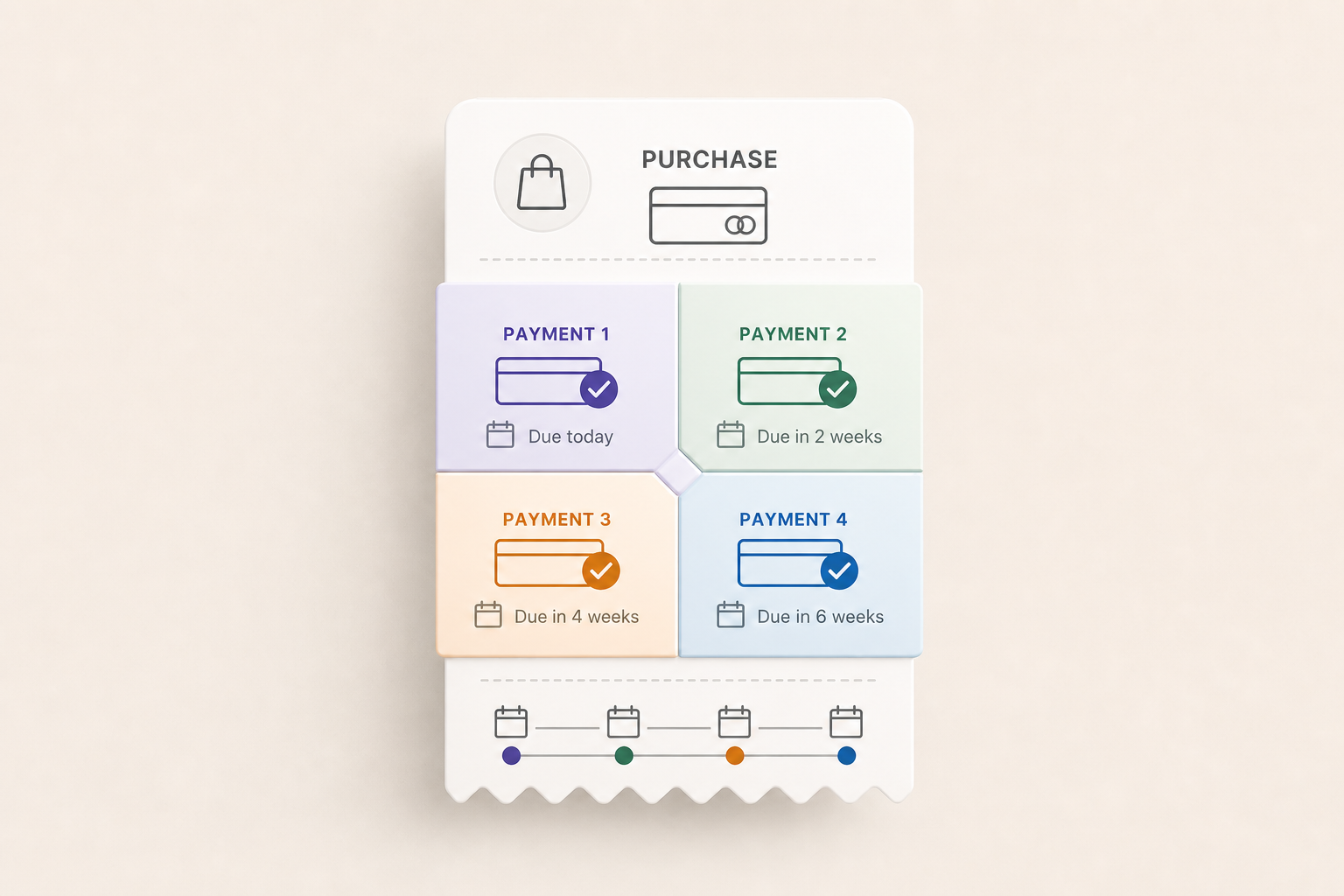
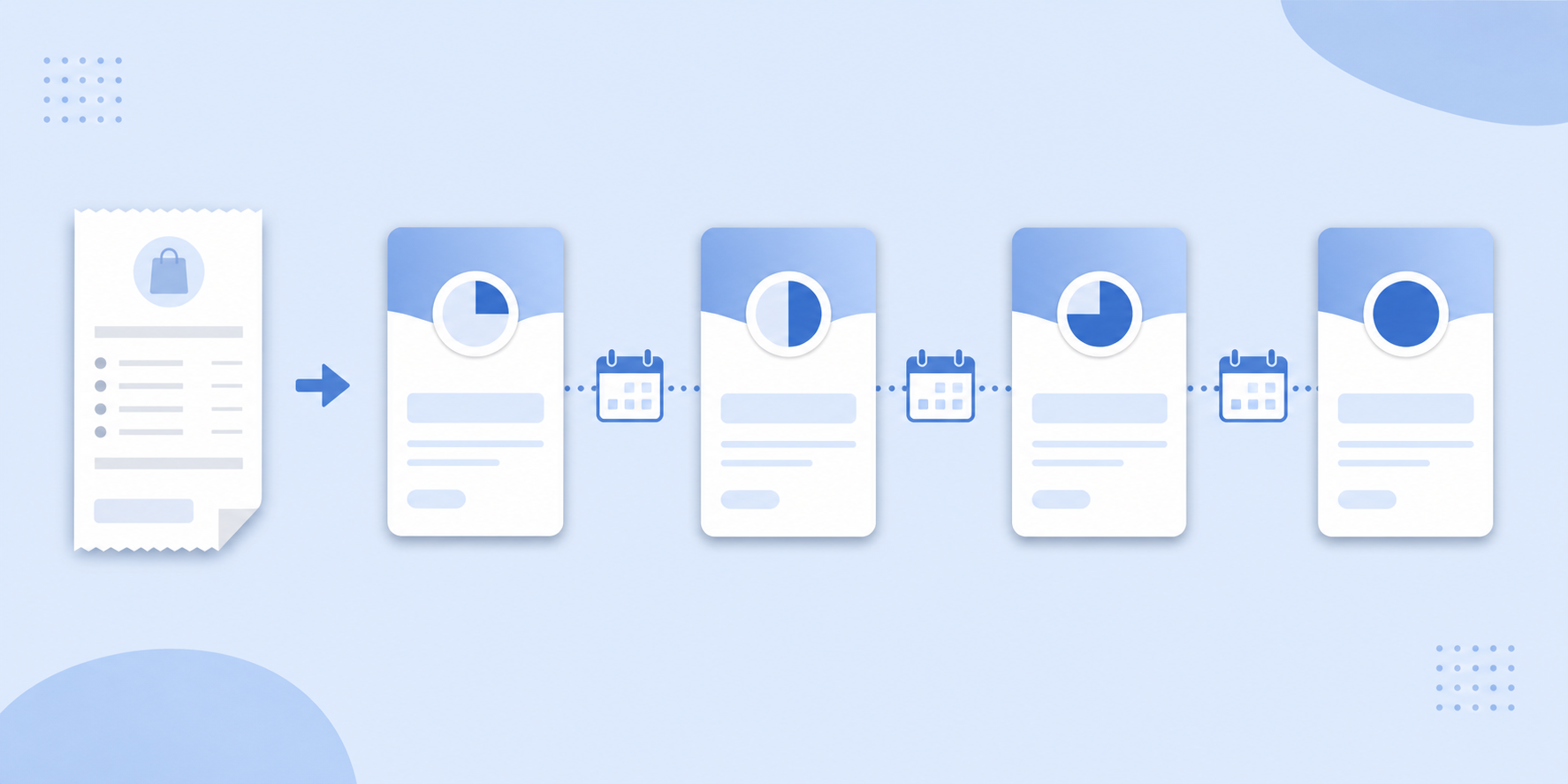
You select a split payment option at checkout, eligible users get an instant decision, and pay the first installment right then. See how Four works for a full walkthrough. The remaining payments follow on a set schedule, typically every two weeks, until the balance is cleared.
Not all applicants are approved. Results may vary.
Here's what that looks like in practice:
- Payment 1: Due at checkout, usually 25% of the total
- Payment 2: Two weeks later
- Payment 3: Four weeks later
- Payment 4: Six weeks later
The full schedule is shown before you confirm anything, as detailed in the Four user agreement. Most apps send reminders before each payment so you know exactly what's coming and when.
Types of Split Payments
Split payments take a few different forms depending on what you're trying to do.
- Splitting across payment methods: One person, one purchase, multiple funding sources. You put $50 on a gift card and the remaining balance on your debit card. Common at retail checkout and restaurants.
- Splitting across people: A group purchase where each person covers their share, like dividing a hotel booking or a dinner bill.
- Splitting across time: One person pays for one purchase in scheduled installments over several weeks. This is what most people mean when they search "split payment" today, and it's the foundation of how BNPL works.
The third type has grown the fastest, partly because it requires no coordination with others and no full upfront payment. Four's acceptable use policy outlines what purchases are eligible.
Split Payment vs. Deferred Payment
These terms get mixed up often, but the difference is straightforward.
A deferred payment means you delay the full amount to a later date. You owe $200 now, but pay $200 in 30 days. The amount originally owed does not get broken up, only the timing changes, though fees or interest may affect the final total depending on the provider.
A split payment breaks that $200 into smaller amounts paid over time. You pay $50 today, then $50 every two weeks until it's settled. The total is still $200 (though platform charges and late fees may apply), but each individual payment is smaller and fits more naturally around a paycheck cycle.
The practical distinction matters when you're budgeting. Deferring a payment just moves a lump sum forward, which can create the same cash flow crunch at a later date. Splitting it removes the lump sum entirely.
Split Payment | Deferred Payment | |
|---|---|---|
How it works | Total broken into smaller amounts paid over time | Full amount moved to a single later date |
Example ($200) | 4 × $50 payments every two weeks | $200 due in 30 days |
Lump sum eliminated? | Yes (platform charges and late fees may apply) | No |
Cash flow impact | Spread across multiple pay periods | Concentrated on one future date |
Risk | Missing individual installments | Same large payment crunch, just later |
Buy Now, Pay Later as a Split Payment Method
Buy now, pay later is the installment-based split payment model at scale. The structure is nearly universal across providers: pay 25% at checkout, then cover the remaining three payments in two-week intervals over six weeks, Four does not charge interest, but platform charges for automatic payments and late fees may still apply.
The CFPB describes this as the standard BNPL format, and the numbers reflect how widely it's been adopted. According to the CFPB's December 2025 market report, six large BNPL providers originated 335.8 million loans totaling $45.2 billion in 2023 alone.
The appeal is straightforward: the schedule is fixed, the math is simple, and there's no revolving balance quietly accumulating interest in the background.
Benefits of Split Payments for Consumers
Splitting a purchase into installments solves a specific cash flow problem: you want something now, but paying the full price today would wipe out your account. A $200 purchase becomes four $50 payments, each timed around your paycheck cycle instead of stacking all at once.

For people on fixed incomes or irregular pay schedules, that structure matters. It spreads the financial impact instead of concentrating it.
A few other advantages worth knowing:
- No interest charges on standard pay-in-4 plans (platform charges and late fees may apply), unlike credit cards where carrying a balance compounds quietly over time
- No credit check and no SSN required with Four: decisioning is instant and your credit score is never affected
- Fixed schedule with a clear end date, unlike revolving credit that can stretch indefinitely
- Approval happens in seconds, not days
Running a $200 balance on a card with 20%+ APR and paying only minimums can take months and cost far more than the original purchase. A split payment has a known cost and a known end date, upfront.
Benefits of Split Payments for Merchants
Offering split payments does something simple for merchants: it removes the price objection at the moment it matters most.
According to the Baymard Institute, the average documented online shopping cart abandonment rate is 70.22% as of 2026. A meaningful portion of those abandoned carts belong to shoppers who wanted the item but balked at paying the full amount upfront. Flexible payment options at checkout give those shoppers a reason to stay.
The merchant benefits beyond cart recovery:
- Higher average order values, since buyers are more willing to add items when the per-payment cost feels manageable
- Upfront payment from the BNPL provider, so the merchant gets paid immediately regardless of the customer's installment schedule
- No repayment risk, since the BNPL provider handles collections
- Broader customer reach, including shoppers who avoid credit cards entirely
How Split Payment Apps Make Money
Split payment apps earn revenue through two main sources: merchant fees and consumer fees.
Retailers pay the BNPL provider a percentage of each transaction, typically between 2% and 8%. Merchants accept this cost because higher conversion rates and larger order sizes offset it.
On the consumer side, most pay-in-4 apps charge late fees when a payment becomes late, and some add a fee per installment regardless of payment timing. At Four, a potential fee of up to $3 per installment is disclosed during order setup, along with a $7 late fee and an additional $8 if payment goes another seven days unpaid (or a $10 flat fee in select states).
Four uses automatic payments, which is why a charge of up to $3 per installment may apply. To avoid that charge, you must pay manually a minimum of 3 business days before your scheduled due date.
The model works when fees are disclosed upfront. Read the fee schedule before confirming any split payment order.
How to Manage Multiple Split Payments Without Missing Due Dates
Juggling two or three active installment plans gets messy fast, especially when due dates fall in different weeks and pull from the same account.
A few habits that help:
- Track every due date in your phone calendar the moment you split a purchase. Set a reminder 48 hours early so you're never caught off guard. To avoid Four's platform charge for automatic payments, pay manually at least 3 business days before your scheduled due date.
- Turn on in-app payment reminders. Four sends notifications before each installment so the date doesn't sneak up on you; see the Four SMS terms and conditions for details on how alerts work.
- Link a funding source you actually use daily. If your BNPL payments pull from an account you rarely check, it's easier to miss a payment.
- Before splitting another purchase, add up what you already owe across all active plans in the next two weeks. If that number strains your paycheck, wait.
The last point is the one most people skip. Stacking multiple plans that all hit in the same pay period recreates the exact cash flow problem you were trying to avoid.
What to Watch Out For With Split Payments
Split payments are genuinely useful, but they carry real risks worth understanding before you commit.
The biggest one is overspending. When a $200 purchase feels like four $50 payments, it's easy to say yes to things you'd otherwise skip. That math works fine in isolation. Across three simultaneous plans, it stops working.
Late fees are the other thing to take seriously (premium members should also review the Four Plus terms of use). 47% of BNPL users reported making a late payment in the past year. A late payment costs real money, and consecutive late payments compound quickly. Read the fee schedule before you confirm any order.
How Four Lets You Split Eligible Purchases Into 4 Easy Payments
Four handles everything from checkout to final payment: browse participating retailers through the app, get a one-time virtual card, and check out like normal. The first payment is collected immediately; the next three are scheduled and collected automatically every two weeks until the balance is cleared.
No credit check. No Social Security Number required. No impact to your credit score. Instant decisioning, and the full fee schedule, including charges of up to $3 per installment, is shown before you confirm. No interest charges, though platform charges and late fees may apply.
Payments are collected automatically on schedule, and Four sends reminders before each installment. Every active order and upcoming payment is visible in the app if you want a full picture.
Four is available to U.S. residents 18 and older. Not available in New Mexico.
Not all applicants are approved. Results may vary.
Final Thoughts on How Split Payments Can Work for You
Once you see how split payments fit into a budget, the appeal is obvious. Smaller payments spread across your pay cycle are just easier to manage than one big charge. Read the fee schedule, track your due dates, and you'll get the most out of every order.
FAQ
How do buy now pay later apps like Four make money if they charge shoppers no interest?
BNPL apps earn revenue from two sources: merchant fees and consumer fees. Retailers pay a percentage of each transaction (typically 2-8%) in exchange for higher conversions and larger order sizes, while shoppers may be charged a small per-installment fee and late fees if a payment becomes late. Four uses automatic payments; a platform charge of up to $3 per installment applies automatically unless you pay manually at least 3 business days before your scheduled due date.
What are the best buy now pay later options for people on a fixed income?
Pay-in-4 apps are well-suited for fixed incomes because they break purchases into four equal payments timed around a two-week pay cycle, with no interest (platform charges and late fees may apply) and no revolving balance. Four requires no credit check and no Social Security Number, and approval takes seconds without affecting your credit score. The key is making sure each scheduled payment aligns with your actual deposit dates before confirming an order.
Is Four a good Afterpay alternative for splitting online purchases?
Four works similarly to Afterpay, offering four equal, interest-free payments every two weeks. Four requires no credit check or SSN and provides a one-time virtual card for checkout at participating retailers. Four also includes a built-in payment reminder system and a single dashboard to track every active order and upcoming due date. It is available to U.S. residents 18 and older, except in New Mexico.
How do I manage multiple buy now pay later payments without missing due dates?
Add every due date to your phone calendar the moment you split a purchase, and set a reminder 48 hours ahead. To avoid the platform charge for automatic payments, pay manually at least 3 business days before your scheduled due date. Before splitting another purchase, total up what you already owe across all active plans in the next two weeks. Stacking plans that hit in the same pay period recreates the cash flow pressure you were trying to avoid. Four sends automatic payment reminders before each installment, which helps when you have more than one order running at the same time.
What is the difference between a split payment and a deferred payment?
A split payment divides a total into smaller amounts paid over time (for example, four payments of $50 every two weeks). A deferred payment keeps the full amount intact but moves it to a later date, so a $200 balance is still $200 when it comes due. Splitting removes the lump sum entirely; deferring just relocates it, which can create the same cash flow crunch on a different day.