
Disclaimer: This article is provided for informational purposes only and is not intended as financial advice. Individual circumstances vary. Consumers should consider their own financial situation and consult a qualified professional regarding their specific needs.
You’re ready to split a purchase, but the spending amount shown in a pay in 4 app may not guarantee approval. Not all applicants are approved. Results may vary. Each order may require a new decision, and the payment option selected determines the fees and schedule that apply. One way to compare apps without relying on the checkout label is to look at signup eligibility, accepted repayment methods, and the terms attached to the actual purchase.
TLDR:
- Signup eligibility often depends on age, state, accepted payment methods and credit inquiry terms, which vary by provider.
- Provider terms typically list the first payment date, later due dates and any rescheduling fees before checkout.
- Late fees, per-installment charges and membership costs vary by provider. Total repayment on a BNPL plan may differ from the purchase price. Some BNPL plans may charge fees even when they do not charge interest, so consumers should review the total cost before agreeing to a plan.
- Repayment options are often separate from checkout methods, and wallet acceptance may differ.
- With Four, payments are collected automatically, and you must pay manually a minimum of 3 business days before your scheduled due date to avoid the platform charge for automatic payments. Platform charges and late fees may apply. With Four, a late fee may apply if a payment becomes late, and an additional charge may apply if it remains unpaid; amounts vary by state. See the Four user agreement for details.
What a Pay in 4 App Actually Is
Pay in 4 is a buy now, pay later (BNPL) format discussed in the Federal Reserve’s BNPL product overview (published June 2026, checked November 2026). On most standard pay-in-four plans, the schedule includes a checkout payment followed by three payments every two weeks, spanning about six weeks; provider terms confirm timing.
Payment format matters when comparing apps.
Monthly installment plans and interest-bearing financing often have different terms than pay-in-four plans. For apps offering multiple options, cost comparisons depend on which format is selected. Features vary by provider, card, and BNPL product. Consumers should compare the specific costs, repayment terms, and credit-reporting practices applicable to each option.
How Pay in 4 Apps Make Money
Pay in 4 revenue can come from retailers and shoppers. Depending on the provider’s terms, charges may include merchant fees, shopper late fees or per-installment service charges.
As of November 2026, Stripe’s guide explains how BNPL services earn revenue. For shoppers comparing apps, the distinction is who pays: a retailer’s processing cost is typically separate from charges in the shopper’s agreement. The provider’s disclosures show which costs may apply to a purchase.
Signup Requirements to Check Before You Download
The provider’s website lists signup requirements and state restrictions to check before downloading.
Signup detail | What to check |
|---|---|
Minimum age | The provider’s stated age requirement |
Residency | Whether U.S. residency is required and your state is eligible |
Contact details | Email and phone number requirements |
Payment method | Whether your debit card, bank account, or credit card is accepted |
Availability in an app store does not confirm eligibility to use the service.
Whether the App Does a Credit Check
Whether signup or a purchase triggers a credit inquiry depends on the provider and product. A soft credit pull does not affect your credit score, while a hard inquiry may.
The selected payment option’s terms should explain whether a credit check applies, what type of inquiry is used, and whether each new purchase requires another inquiry. Requirements may vary by purchase amount or product type.
Payment Schedules and How They Differ
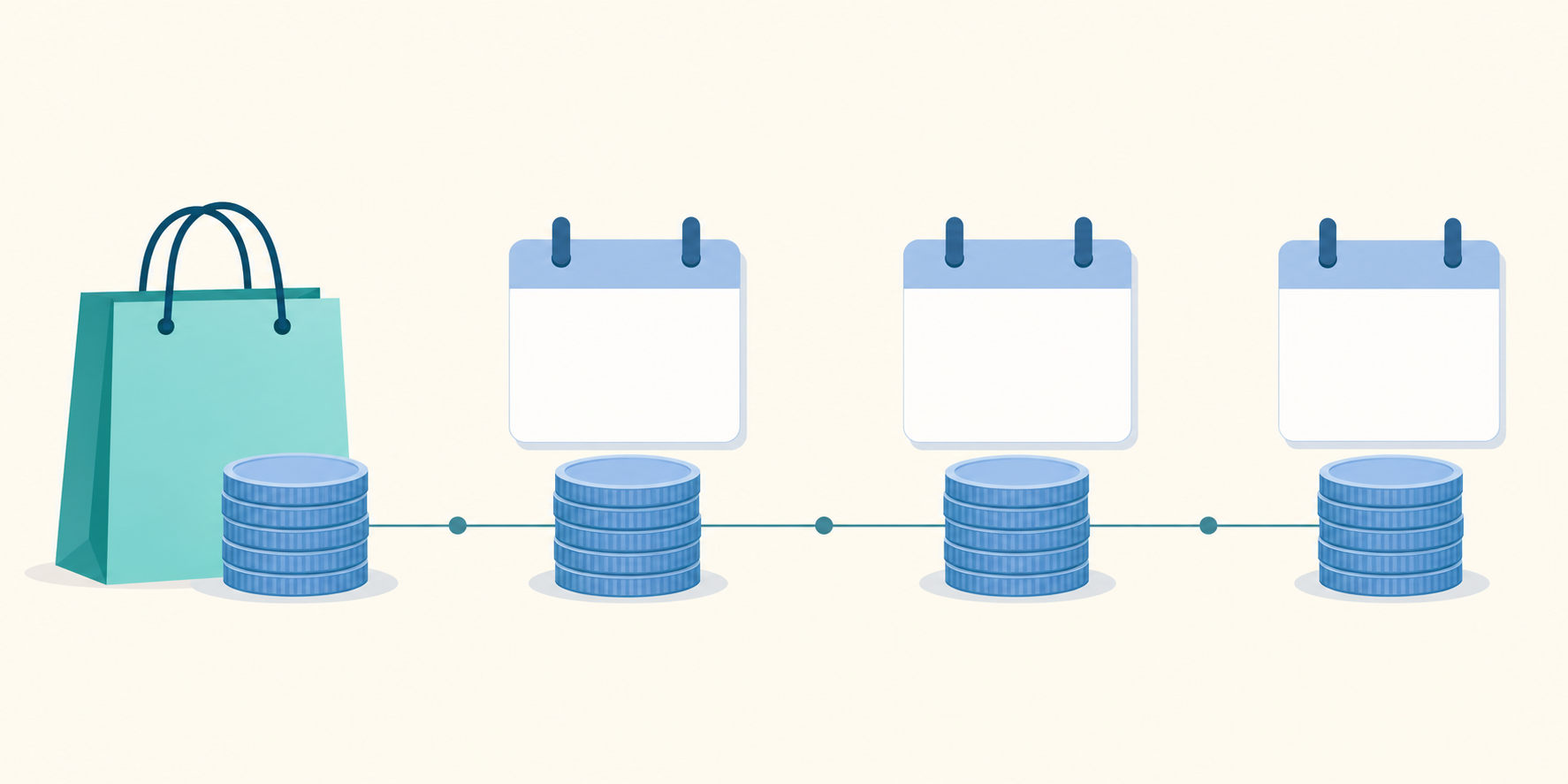
Apps using the same “pay in 4” label may have different payment schedules. Before confirmation, the schedule and terms should clarify:
- When the first payment is collected.
- The exact dates of later payments.
- Whether due dates can change, including rescheduling fees, restrictions and request deadlines.
A payment reminder or conversation with support does not necessarily confirm a due date change. Any adjustment remains subject to the provider’s conditions.
Fee Structures: What to Read Before You Confirm
Fee terms should clarify which costs apply before you confirm a purchase:
- Late fees after a payment becomes late, including whether charges increase while a payment remains unpaid.
- Per-installment service fees, including whether automatic payments carry these charges.
- Subscription or membership costs for access to additional stores or features.
Total repayment on a BNPL plan may differ from the purchase price. Some BNPL plans may charge fees even when they do not charge interest, so consumers should review the total cost before agreeing to a plan. The specific provider’s terms determine applicable fees.
Retailer and Merchant Network Coverage
Retailer coverage typically includes both store availability and checkout requirements. When comparing pay in 4 apps, some shoppers look at whether their usual stores are supported:
- Is use limited to participating merchants?
- Can you make purchases outside the partner network, and what exclusions apply?
- Is a browser extension or virtual card required for those purchases?
Online availability does not confirm in-store acceptance. Each provider’s terms can clarify which shopping channels are supported.
Accepted Payment Methods
Funding an installment and paying a retailer are often separate steps. A wallet accepted at checkout may not be available for repayments.
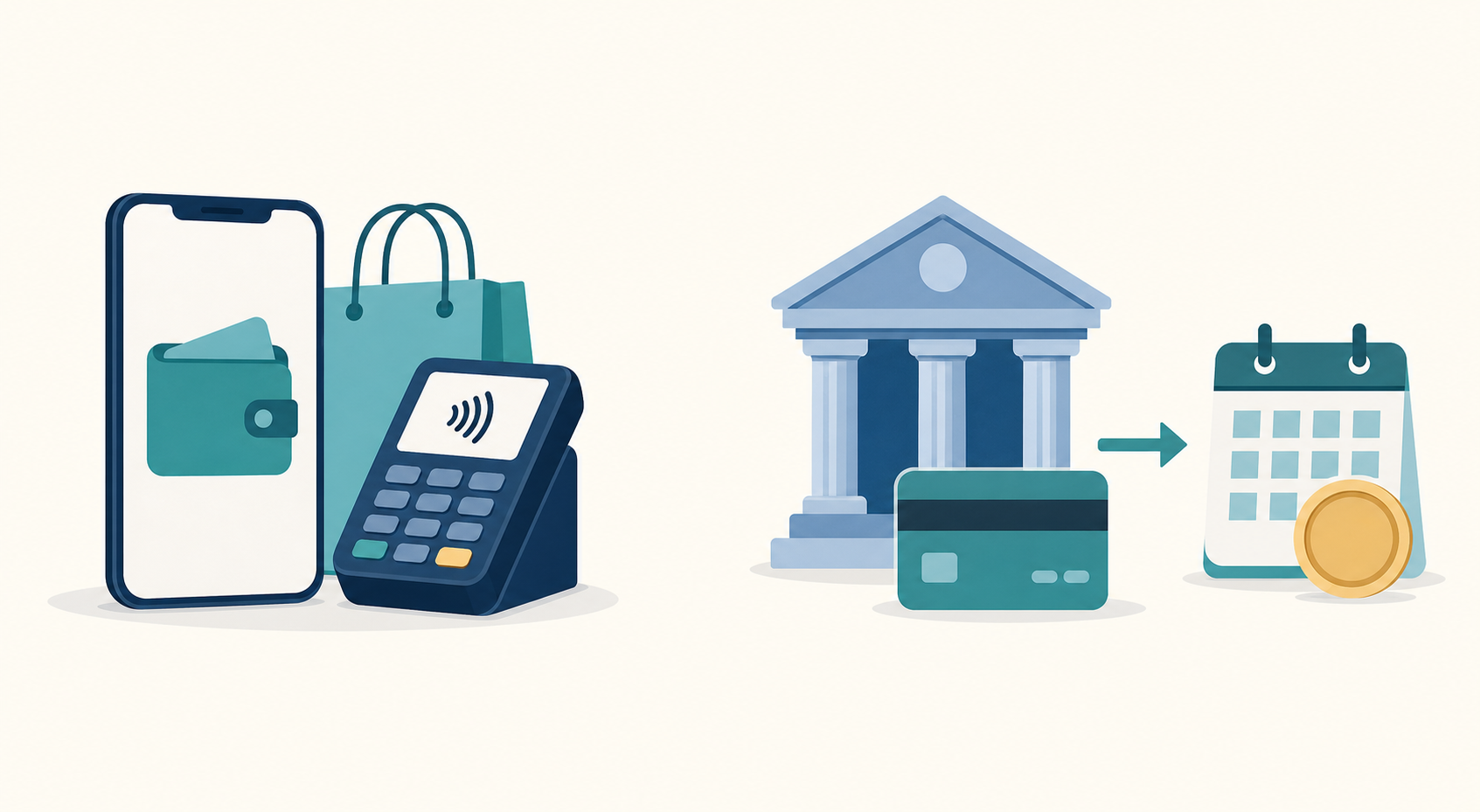
An app’s repayment terms typically list accepted debit cards, bank account (ACH) connections, credit cards, and digital wallets such as Apple Pay or Google Pay.
For debit-only users, any credit card requirement for approval is distinct from a requirement to keep an accepted payment method on file.
How Spending Limits and Approval Decisions Work
A displayed Pay in 4 spending amount may be conditional. Not all applicants are approved. Results may vary. The provider’s terms should clarify whether decisions happen in real time for each transaction and whether account history, payment behavior or purchase size affects the decision.
With per-transaction decisioning, an amount approved for one order does not guarantee approval for the same amount later. Access to another purchase depends on a new decision.
What Happens If a Payment Becomes Late
A provider’s late-payment terms should explain whether an overdue installment may pause new purchases, restrict account access or trigger further charges, plus any conditions for restoring access.
Reminder features to compare include push notifications, email and texts, along with how far ahead of the due date notices arrive.
Late payments may result in fees or collection activity. Whether a missed payment affects your credit history or credit score depends on the provider's reporting practices and other circumstances. Each provider’s credit-reporting terms describe its own practices, and this guide covers how BNPL impacts your credit score in more detail.
Pay in 4 for Online Shoppers Without a Credit Card
For online shoppers without a credit card, a pay in 4 app’s terms should clarify whether debit-only signup and repayment are available. Comparison points include:
- Whether your bank or debit card is accepted for repayment.
- Whether signup requires a bank connection.
- Whether the app shows upcoming withdrawals and the total still owed.
These details describe each app’s payment requirements, which can also be useful background when reviewing how buy now pay later works.
Pay in 4 as a Merchant Payment Option
For a small online retailer, offering pay in 4 typically involves integrating a provider at checkout. The shopper typically repays the provider in installments, and the provider's merchant agreement specifies payout timing and applicable fees.
Merchant comparison points include:
- Integration support and availability of Shopify or WooCommerce plugins, part of understanding buy now pay later payments from a merchant's perspective.
- Transaction fees, payout timing, and the resulting net payout.
- Whether the provider’s shopper network fits your store’s customer base.
How Four Approaches Pay in 4
How Four works: with Four, an online purchase from participating retailers available on the Four app is split into four easy payments, with the first at checkout and the rest every two weeks. With Four, checkout uses a one-time virtual card through 1-Click Checkout, with no lengthy forms. Four does not perform a credit check when you sign up or when evaluating an order, so applying with Four does not result in a hard credit inquiry. With Four, no Social Security number is required to sign up. With Four, each order goes through real-time decisioning, and there is no credit card application. Not all applicants are approved. Results may vary. At Four, eligibility includes U.S. residents 18+, except in New Mexico, as outlined in Four's additional disclosures.
With Four, payments are collected automatically, and a platform charge for automatic payments is disclosed during order setup. Platform charges and late fees may apply. To avoid the platform charge, you must pay manually a minimum of 3 business days before your scheduled due date. With Four, a late fee may apply if a payment becomes late, and an additional charge may apply if it remains unpaid; amounts vary by state. See the Four user agreement for details. With Four, payment extensions are not offered. With Four, merchants receive payment upfront, a reminder is sent before each installment, and shoppers see every order and payment in one place in the Four app. With Four, due dates and linked payment methods are also covered in Four's FAQ.
Final Thoughts on Pay in 4 App Choices
Your choice goes beyond splitting a purchase into payments. Eligibility, fees, and repayment dates all count. You can bring those details into your next app comparison.
FAQ
How do Four’s due dates work if your payday changes from week to week?
With Four, due dates are fixed and payment extensions are not offered, so an installment may come due before a changing payday arrives. With Four, contacting Four Support does not move a due date or pause a scheduled payment.
Can you use Apple Pay at Four checkout and still repay without a credit card?
Apple Pay support at checkout does not by itself confirm how installments are repaid. With Four, Apple Pay, Google Pay and bank-issued cards are listed as supported payment methods, and using Four does not require applying for a credit card. Wallet checkout and installment repayment are often separate steps, and with Four, the method linked to each order appears in the Four app and in Four's FAQ.
How do you calculate the total cost of a Four purchase before confirming?
Total repayment on a BNPL plan may differ from the purchase price. Some BNPL plans may charge fees even when they do not charge interest, so consumers should review the total cost before agreeing to a plan. With Four, the total may include the purchase price plus any platform charge for automatic payments disclosed during order setup. Platform charges and late fees may apply. To avoid the platform charge, you must pay manually a minimum of 3 business days before your scheduled due date. With Four, some retailers require a Four+ subscription, and that subscription cost is separate. With Four, a late fee may apply if a payment becomes late, and an additional charge may apply if it remains unpaid; amounts vary by state. See the Four user agreement for details.
Subject to eligibility and approval. Spending power not guaranteed. Platform charges and late fees may apply. Some retailers require a Four+ subscription. Not available in NM.